Tag: news

  • What Happens When the Marginal Driver Is a Robot?

    Today, congestion is partly constrained by human tolerance. At some point, a trip becomes slow enough that the marginal driver decides it is not worth making. But what happens when the marginal driver is no longer a person? What if it is an empty robotaxi repositioning itself, or a self-driving car carrying a Chipotle burrito across town?

    Those trips may be willing to tolerate much more delay than a human commuter. Instead of autonomous vehicles making long commutes easier and encouraging more sprawl, they could actually push congestion to a much worse equilibrium. A commute that takes 30 minutes today might take an hour or two simply because so many low-value automated trips are willing to sit in traffic.

    That could eventually force a change.

    My preferred solution would be simple congestion pricing: charge every vehicle the same market-clearing price to use scarce road space, with no special exemptions. Raise the price until traffic flows freely.

    If that makes a private car trip cost $70, so be it. A bus carrying 30 people can spread the same road charge across 30 passengers. A car with four people can split it four ways. The system naturally rewards higher occupancy without needing complicated rules about which vehicles deserve priority.

    Then use the congestion-pricing revenue to improve transit.

    That could become especially powerful in sprawling cities that already have underused rail infrastructure. Take SunRail in Orlando. If I-4 became painfully congested, it might suddenly make sense to take a robotaxi to the nearest station, ride the train for the long-distance portion, and take another robotaxi at the other end.

    At that point, the giant parking lots around suburban rail stations become less necessary and can be replaced with compact pickup and drop-off zones. The parking lots can then be redeveloped into housing, shops, and offices. More development around the stations creates more riders, which supports better frequency, which makes the surrounding development even more attractive.

    There would probably be an ugly transition period. But I can imagine autonomous vehicles pushing the current system hard enough that we finally start treating road space as the scarce resource it actually is.

    And if that ultimately produces faster roads, better transit, more pooling, and denser development around rail, the end state could be substantially better than what we have today.
  • Death by Poor Urban Planning

    Every time we hear about a tragic car crash, the story is usually framed around individual blame. Someone made a mistake, someone wasn’t paying attention, or someone was reckless. But beneath these headlines lies a harder truth. Our urban design itself creates the conditions for these deaths. Poor urban planning is not just an inconvenience or an aesthetic misstep. It is a public health crisis that costs lives every day.

    In too many American cities, Charlotte included, roads are engineered like highways. They are wide, fast, and hostile to anything but cars. Corridors such as Independence Boulevard prioritize vehicle flow over human life, encouraging high speeds and leaving pedestrians and cyclists exposed. In this environment, even a brief lapse of focus, just a few seconds, can turn a mistake into a tragedy.

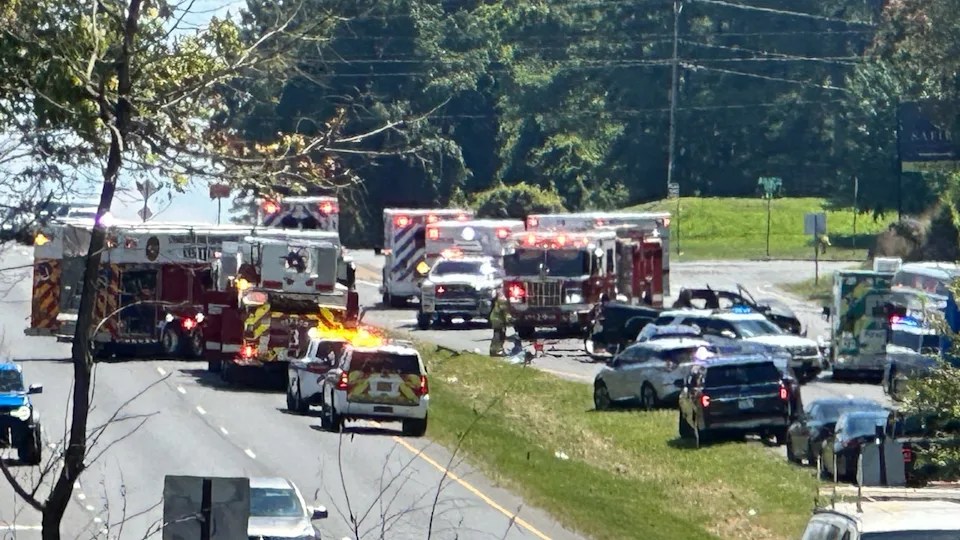
    Accident on Independence Boulevard, Charlotte NC injuring 6 people

    Just a few hours ago, as I write this post, there was an accident on Independence Boulevard that sent six people to the hospital, one with severe life-threatening injuries. It is tempting to place all of the blame on a driver going too fast. The harder truth is that the driver was simply responding to incentives created by reckless city planning, such as wide lanes, high speed limits, and a lack of safe transit alternatives. If the road had been designed to slow speeds and protect people, it is likely this crash would not have been so devastating or have happened at all.

    And incidents like this are far from rare. The Charlotte-Mecklenburg Police Department website listed seven similar traffic events in just the past three hours alone.

    To err is human. Every driver will make mistakes behind the wheel, such as misjudging a turn, glancing at a phone, or reacting a second too late. A safe transportation system recognizes this reality and builds in forgiveness. Narrower lanes, slower speeds, and protective infrastructure can ensure that a mistake does not automatically mean death. But our current design does the opposite. It demands flawless driving from every user, every second. That is not just unrealistic. It is negligent.

    There is another layer to the problem. Many people simply should not be behind the wheel of heavy machinery. Teenagers, seniors, those with medical conditions, or people who are poor drivers are still forced to drive because cities have left them with no alternatives. By designing systems where car travel is the only viable option, we compel people into dangerous situations that put their lives and the lives of others at risk.

    The spread-out, car-dependent development pattern of low-density housing, long commutes, and seas of parking creates endless demand for driving at higher speeds. Strong Towns and other urbanist voices have long warned that this model is both financially unsustainable and physically dangerous. More driving leads to more crashes, and higher speeds lead to more fatalities. The math is simple, and it is killing us.

    If we want fewer deaths, we must stop pretending this is about individual failure. Real safety comes from systemic change.

    • Slower streets with narrower lanes, traffic calming, and enforced lower speed limits.
    • Safe alternatives such as protected bike lanes, sidewalks, and reliable public transit.
    • Walkable, mixed-use communities where housing and jobs are close together, reducing the need to drive.
    • Equitable design that prioritizes vulnerable road users and invests in underserved communities.

    We call crashes “accidents” as if they were unavoidable acts of fate. They are not. They are predictable outcomes of policy choices, zoning codes, and street designs. Every fatal crash reflects a system that refuses to put people’s lives above the convenience of cars.

    Poor urban planning kills. With better choices and people-first design, we can build cities where human mistakes no longer cost human lives.